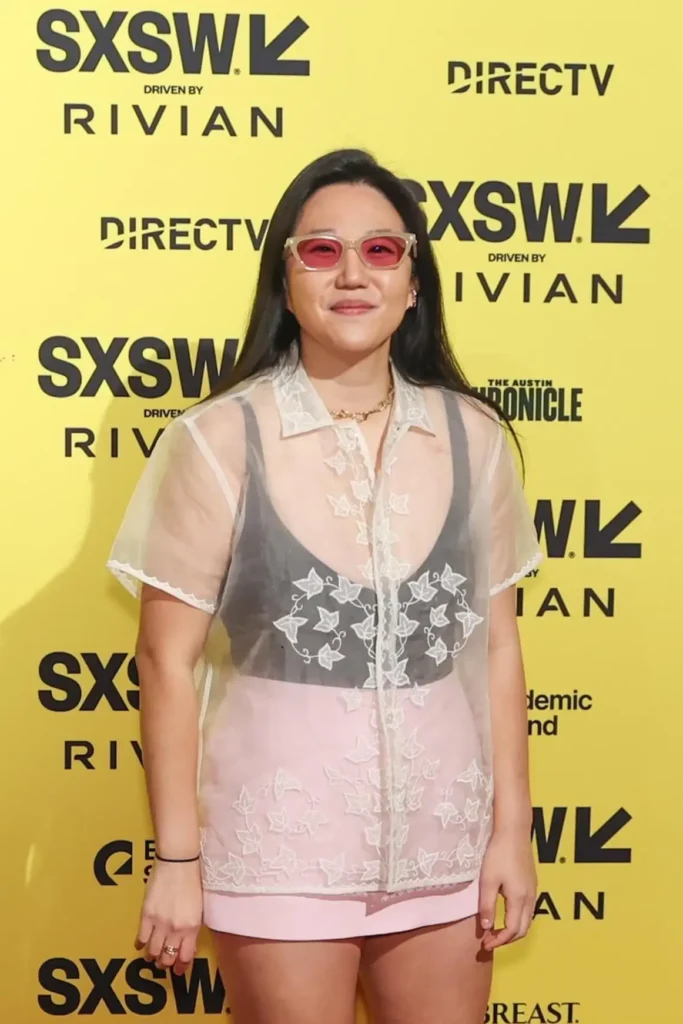
Growing up between Malaysia and Florida, JING AI NG had a passion for writing that eventually expanded from novelist aspirations to screenwriting and directing. Ng became the first director of Malaysian origin to attend the American Film Institute Conservatory, where she earned an MFA in directing. Her career accolades came quickly, winning a Directors Guild of America Student Film Award and a Cannes Lions Gold Screen Young Director Award, as well as fellowships with the Telluride Film Festival and Film Independent. Her short films, including Fleck and Delta, have played at over 50 film festivals around the world. With those successes under her belt, Ng got to work on her feature debut, FORGE.
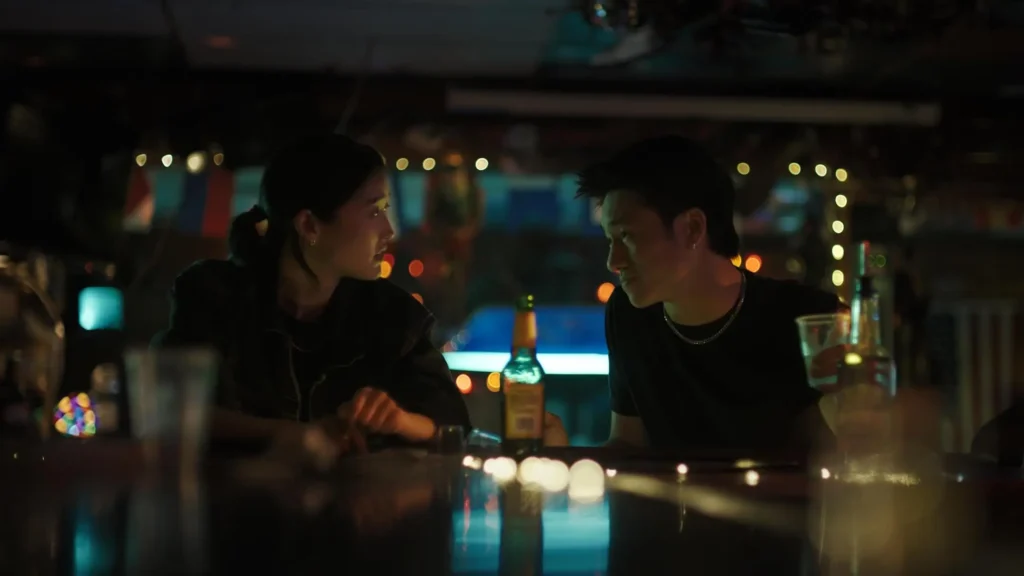
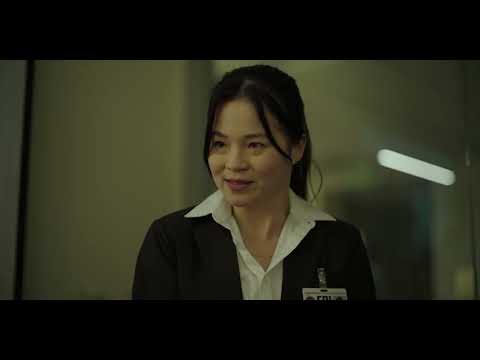
Forge centers on Miami siblings Coco (Andie Ju) and Raymond (Brandon Soo Hoo), expert art forgers who get in over their heads when their risky work brings on the attention of shady millionaire Holden Beaumont (Edmund Donovan) and intrepid FBI agent Emily Lee (Kelly Marie Tran). T.R. Knight, Eva De Dominici, and Sonya Walger co-star in Forge, which premiered at the 2025 SXSW Film Festival.
Forge arrives in theaters in Los Angeles on May 15 and in New York on May 22, courtesy of distributors Utopia and Circle Collective. We had the chance to talk to the film’s screenwriter/director/producer, Jing Ai Ng, about bringing the story to the screen.
__
COLIN McCORMACK: Where did the initial inspiration for the Forge screenplay come from?
JING AI NG: I’m an art crime fan and follower. I grew up in Miami, and I love crime movies. One of the most recent art forgery scandals — one of the biggest ones in New York — the forger behind $80 million worth of art was a Chinese-American man who fled the country. No one has ever successfully interviewed him. I thought that was fascinating because his day job had nothing to do with art. They tracked him down because they found rusty nails in his garage that were used in the paintings. That sparked my imagination and led to Forge.
CM: I was going to ask how much research was involved in learning those details and the minutiae of the art forging world, but it sounds like you already came in with a good knowledge.
JAN: I definitely did a lot of extra research. Art forgers are very interesting people, and there have been a lot of books, articles, and interviews. They actually really love talking about it, so that was helpful. It was very easy to do the research.
CM: Once you had a draft of the screenplay you were happy with, what were your first steps to take it to the next level and get it out there?
JAN: Hopefully, other people have an easier process than this. I graduated from AFI in 2020, and it was the pandemic. I really thought I was going to quit because I didn’t know what the world was going to be like. I didn’t know if we would ever be in the cinema again. When my thesis film [Fleck] came out, I won a single award, which was the DGA Student Award. It played in the cinema, and then the pandemic happened, and it never played in a theater again. That was really disheartening as a filmmaker. But during that year, I wrote Forge. That was from 2020 to 2021, and now it’s 2026, and the movie is coming out. So it was a really long process. It took a while to find financing, especially because we were sticking with Asian characters as the leads. To be honest, that was kind of a barrier. We had over 150 meetings over the course of two years. So it took time.
CM: Were people bold enough to say specifically that the Asian actors were a barrier?
JAN: Yes, unfortunately. They’d say, “We love the script, we love the concept, but we are worried that the film doesn’t have a broader appeal because of the main characters.” Maybe it’s coded and not as direct all the time, but it’s always there.
CM: So, who were the champions that helped get it over the hump and make it a reality?
JAN: I definitely credit Film Independent, because they stuck with us the entire development process. I was in their Screenwriting Lab in 2021, and I was developing the script, which was set in New York then. Then we went to Fast Track, which is the market where we meet a lot of financiers. And though we didn’t meet our executive producers directly from that, someone from the program introduced us to someone else, and it all happened in a really short amount of time. That was a really nice surprise, that even though we didn’t meet [our financiers] directly because of that, someone was gracious enough to introduce us to someone else, and was thinking of us still. I really credit Film Independent for so much.
CM: Was the decision to change the setting from New York to Miami for production reasons or story reasons?
JAN: Definitely for story reasons. When I was in the Screenwriting Lab, it was still set in New York, and the note I got frequently was that the setting seemed kind of impersonal. And so I decided to set it in Miami, which is a city where I’m from, obviously, and I know so intimately. I was able to reference places like Tropical Chinese, which is a restaurant we’ve been eating at my entire life. It’s famous in Miami for being one of the oldest Chinese restaurants there, since the 1980s. I wrote it in as a placeholder because I didn’t know whether we could actually film there. But a friend passed the script along to the owner, Greg, and he thought it was really funny that I had made his entire family art forgers. So he let us film there for free, which was really nice.
CM: Was there a filmmaking community in Miami that you tapped into, or were a lot of people coming from all over the place?
JAN: Definitely Miami locals. It was awesome because our crew really showed up for us, and I think a lot of people were passionate about the script and the fact that it was a Miami story.
CM: You have all these fleshed-out characters for so many Asian actors to play. Could you talk about how you got your cast together?
JAN: I felt passionately that we shouldn’t change the race of the main characters to get this movie made. It was something that I was really stubborn about because I thought it was so closely tied in, thematically. The great part is that we didn’t have a cast attached by the time we knew we were going into production, and while that is daunting, it also means that you get to open up the possibilities.
The first person who came on board was actually T.R. Knight. He got sent the script [to play] Holden, but he pitched himself as Sandy Baker, who was then written as a very different character. When T.R. came on board, Kelly took a look at the script. Famously, her manager did not send her the script, so we kind of went around him [laughs]. For the two leads, Coco and Raymond, we were able to open up that casting call and do a discovery search. That was something I was really passionate about, that we should read as many people as we can across the country and figure out who these characters and actors are going to be. And that was Andie and Brandon.
CM: The connection and bond as siblings is so great and pronounced, but were you able to have time or money for rehearsals so the actors could get to know each other?
JAN: We had two days total with Andie, Brandon, and Kelly. It was more like 16 hours total, which is a good amount of time for an indie film, but it definitely was a stretch. Because there are so many scenes in this movie that involve those three, it involved mostly talking through the script and making sure that everyone knew where their characters were coming from. That was a really awesome experience.
CM: How many days of production did you have?
JAN: I think it was 23.
CM: You did your research on the art world on the front end, but once you were in production, how did you work with the art department or consultants to get the paintings and processes right?
JAN: We had art consultants, and we also had an amazing art department. But most of all, because we are an indie film and our budget was low, we knew that we had to be really deliberate with our forgery sequences on those days, because it always takes longer than you think it’s going to take. We were having these all-hands-on-deck meetings way out, where everyone would bring ideas, and we were specifically honing it down to what we were going to film. I’m really happy that everything we filmed for the forgery sequence made it into the movie, because we were so deliberate about it. And I really credit the team for bringing their research to the table. It was a team effort from everyone.
CM: So all those paintings were painted for the film?
JAN: Yes. Especially on our budget, it was a challenge. This is an art-heavy movie, and when you write the script, you’re thinking, I’m not putting explosions or stunts in here. How bad can it be? And, lesson learned [laughs].
CM: Was that the most challenging part of the film to shoot, or were there other sequences or scenes that were harder to power through?
JAN: The big thing was that Tropical Chinese did not close for business while we were filming there. So our hours were crazy. I’m not sure it’s an experience I necessarily want to replicate, because it was kind of odd, and the kitchen was still working. So, we had to avoid certain things, and it was definitely a challenge.
CM: Are there collaborators from AFI that you’ve continued to work with?
JAN: Yes, a couple of my producers [Gabrielle Cordero and Liz Daering-Glass] are from AFI, but the two people I’ve worked with most closely for almost a decade are my DP, Leo Purman, and my editor, Briana Chmielewski. Those two I have worked with since my shorts in film school. Having that shorthand really makes things a lot easier. Arielle Ness-Cohn, our production designer, was an AFI grad as well. I had not worked with her, but we found her through the network. It was a beautiful thing that we were able to flesh out the film with some familiar faces and people who were familiar with our way of working.
CM: What visual references did you and your DP use to represent the world of the characters?
JAN: We were always talking about how to make it obvious that these characters do not necessarily fit into their environment. I’m someone who likes to play with Americana and the concept of characters of different races in very American settings. Especially now, I think it is important to question what that means and how that can feel. That was something we brought to Forge. Visually, we pulled a lot from David Fincher. I love The Social Network. I also really love this film called To Live and Die in L.A., which is a forgery movie. The forgery sequence is very much in reference to that.
CM: What was the biggest learning curve going from shorts to features?
JAN: It was a bigger learning curve than I anticipated. Shorts are a totally different medium. I had directed so many shorts, that by the time I got to Forge, you would think you’re somewhat prepared. It’s true you can still draw on the craft elements, and it’s so good to have people that you’ve worked with before. For Leo, this wasn’t his first feature, so he was able to bring his experience to me in service of the film. But they are completely different mediums, especially when you get into the edit. Now, instead of having 13 scenes, you have 113 or 120, and that is intimidating. That is a totally different beast. The truth is, I wish there was more synergy between shorts and features because I think it would make so many filmmakers’ journeys much easier. I still don’t have the answer to how to bridge that gap, but I’m grateful to have that experience because it’s something that completely changed the way I think about movies and how I work.
CM: Was your post-production experience more about seeing the film in a new way, or getting it to what your initial vision always was?
JAN: Definitely, it was a different way to see it. We had a very short edit process; I think it was a total of nine weeks. We edited the film really fast, and our budget wasn’t huge, so we were definitely against the clock. In the future, I would love more time to play around. We immediately knew that we had to make it work within this short amount of time, and that meant changes were going to happen. Luckily, Briana was on the project. While we were shooting, we were already thinking of ways that we could tighten it and make it better. I’m really proud of what we did.
CM: Have you had the chance to screen the film in Miami yet?
JAN: Yes, we just screened at the Miami Film Festival this past month, and it was awesome. Our entire crew, basically everyone who worked on the movie, came out. We’ll have a screening again when the film releases in theaters, but it was so good to see everyone again. I’m so grateful that we had the support we did.
CM: As you’ve traveled with the film, how has the audience reaction varied from city to city or country to country?
JAN: It’s been fascinating. I will say, the ending is definitely divisive, and we knew that. My editor and I knew that it was going to be a divisive ending either way, and there are people who love it and people who hate it. I think that has been something cool to see, universally across every country. At a San Diego Asian Film Festival party, my casting director [Damian Bao] was approached by an older Chinese lady, and she said, “I love the ending. I understand this character, and she is me.” That is a cool experience to see people you don’t necessarily think are going to relate to the character feel represented. That has been really nice.
CM: What do you have coming up next?
JAN: I’m working on my second feature, which is a very different film. It’s a coming-of-age story set between Malaysia and England. In many ways, I guess it should have been my first feature. It’s much smaller in scale and definitely more personal.
CM: What lessons will you bring with you that you learned on Forge?
JAN: I think as a filmmaker, I was really eager to compromise on the script in order to make it work at the budget level we had. But I’m starting to learn what compromises to make and what not to. That’s a really important distinction that maybe you don’t have going into your first feature.
__
Thanks to Jing Ai Ng for talking to us about FORGE. Learn more about the film at forge.utopia.film.
This interview has been edited for clarity.
If you’re an independent filmmaker or know of an independent film-related topic we should write about, email blogadmin@sagindie.org for consideration.