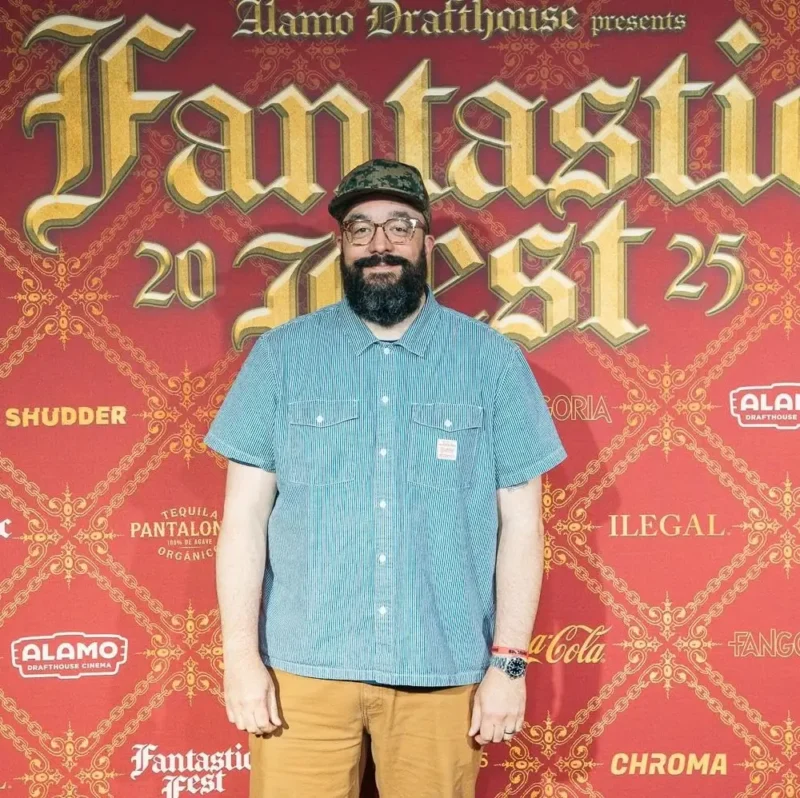
NIGHT PATROL offers a fresh take on a Los Angeles urban crime story, where a rogue gang of LAPD officers targets the residents of a Black community in South Central. Yet in this case, the police are operating under a specific brand of evil (let’s just say the B in ACAB stands for “bloodsuckers”). Directing the film is RYAN PROWS, who also co-wrote the script with Tim Cairo, Jake Gibson, and Shaye Ogbonna. Prows’s filmmaking success dates back to winning a Student Academy Award for his AFI thesis film Narcocorrido. He went on to direct the 2017 feature Lowlife, as well as a segment of the 2021 horror anthology V/H/S/94.
For Night Patrol, Prows has collected a sprawling ensemble cast, including Jermaine Fowler, Justin Long, RJ Cyler, Freddie Gibbs, Keenon Dequan “YG” Ray Jackson, Nicki Micheaux, Flying Lotus, Phil “CM Punk” Brooks, and Dermot Mulroney. The film went on a global festival run, with screenings at Fantastic Fest, Beyond Fest, Imagine Fantastic Film Festival, and Sitges Film Festival.
RLJE Films and Shudder will release Night Patrol in theaters on January 16. We spoke with the film’s director and co-writer, Ryan Prows, about putting his own spin on some familiar genres.
__
COLIN McCORMACK: How did the initial idea for the script come about?
RYAN PROWS: Several of the writers and I worked on my last film, Lowlife, together. As we were doing the festival circuit for that, we just started kicking around ideas for what the next thing was going to be. We tried to come up with the scariest monster movie we could, and landed on the LAPD [laughs].
CM: Do you guys write all together, or are you trading off drafts? How does that collaboration work with your co-writers?
RP: We joke that we’re like the Wu-Tang model of screenwriters, where we all do our own stuff and then come together and form like Voltron. We work more like a TV writer’s room, where we all break the story and then go away and write our separate parts. In this case, we each had an act, basically. Then we came back together and all touched up the whole thing again. It’s a cool process. We all went to school together and share similar sensibilities, but then we also bring our own flavor to it. It’s worked for us so far.
CM: With the genre elements, a lot of times indie filmmakers are told it’s maybe easier, if that’s even possible, to sell a horror film. Did you find that the genre helped get the foot in the door and the ball rolling a little quicker with this project?
RP: Yes and no. It definitely got attention for it. But we’ve been trying to make this movie since we made Lowlife. So, it’s been seven or eight years, something like that. I think more than anything, it was born out of our love of genre and of vampire stuff, specifically. We started having so much fun writing our own rules. Every vampire movie sets what its rules are, and we had fun with everybody figuring out what monster they’re up against and what the rules are for each monster. It was more born out of that than, We can get this movie made.
We definitely took the indie DIY spirit of our first movie. It’s going to get made, so it’s more about what we want to see and put out in the world, what we’re excited about, and what we know other people will be excited about. I would say that if we were writing something just to get it made, I don’t know that this was the one to do that [laughs]. We were up against some challenges as we were making the movie, as you can imagine.
CM: Yeah, you have a lot of night shoots, a very sprawling cast. You didn’t make things easy for yourself.
RP: Yeah, set in LA; shot in LA. None of these things are indicative of an indie, but we did it.
CM: How did you manage to stay in LA on an independent budget?
RP: We definitely had to give up things to be able to do that, just within the management of resources. But it was important to shoot LA for LA. We wanted this to feel like the most authentic LAPD South Central cop/gang movie you’ve ever seen in your life, that turns into this vampire horror. And we wanted to specifically use the communities that we were representing and actually shoot in those places and with those folks as well. That, to me, was the special effect, the thing that you want to spend your money on. We ended up doing fewer days than was comfortable, shooting-wise, because we were shooting in LA. But we had an incredible LA crew, the most professional crew that you couldn’t get anywhere else. We were able to balance it out that way.
CM: When people can go to their own homes at the end of a shoot day, I’m sure that helps.
RP: One hundred percent. That helped with attracting talent as well.
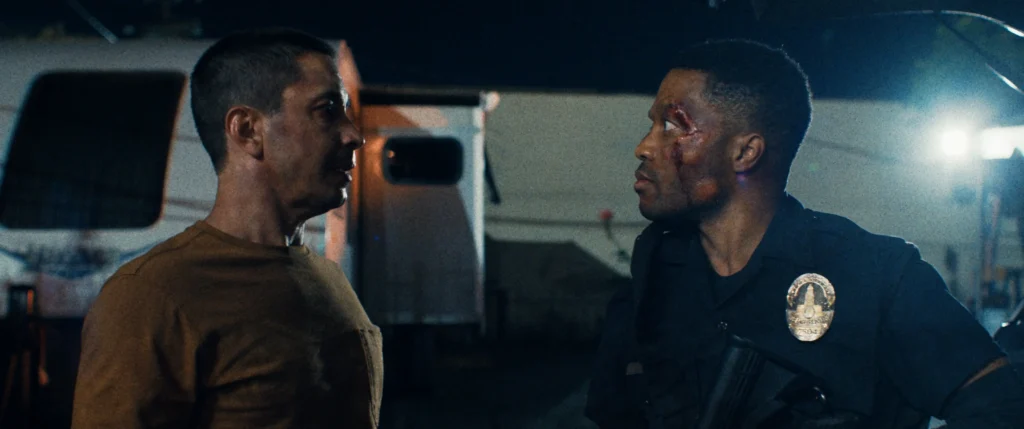
CM: What was the process like finding the perfect mix of actors for this large cast?
RP: We super lucked out. There were different versions of this movie going at different times, and there were wildly different casts. But we ended up with the perfect mix and the perfect cast. I’m still pinching myself that we have all these folks in our movie. It feels like we cast It’s a Mad Mad Mad Mad World as a horror movie.
Part of it was offering awesome folks a role they weren’t offered normally. Justin Long is a Scream King, he’s been in a lot of stuff, but he wasn’t getting offered cop roles. I’ve never seen him like this in a movie, and I’m so excited for people to see him in this different light. He really dug in, put on some muscle, and did the police training. He’s very believable. I was really excited about Freddie Gibbs and RJ Cyler. Jermaine Fowler, I’d been working with on some scripts and different projects, but this is the first thing we finally got done. Nicki Micheaux, I’d worked with before. It was going to these incredible actors and bringing something to them that they haven’t done before that they could get excited about.
CM: Was there a particular scene or sequence of the film that was the most difficult to shoot, and how did you power through?
RP: It felt like the whole thing was difficult to shoot. Towards the end of production, we were doing a lot of the bigger, practical effects stuff. That takes a lot of time. The drain of night shoots in general was a big challenge. We knew going into it, and it was real. And we were shooting in a place where people were living as well. So being conscious of that and being respectful and being a part of the community and working with them, not just busting windows and throwing cables through, was a challenge, but it was worth it. Keeping the energy up and the ball rolling on those long nights was probably the biggest challenge.
CM: It’s a very American and very SoCal story, but I noticed you did several international film festivals. From the festivals that you went to, how did the audience reaction differ country by country?
RP: I was only at Sitges, which was my first time there. That’s just outside of Barcelona in Spain. It’s Catalan, so they have a historically politically-charged environment. So, they got it very, very quickly. Those screenings and that festival were really cool. I was blown away by the size of it and their warmth and generosity. My wife and my son went with me, and we got to meet Terry Gilliam. He clowned around for my kid, so it was a dream come true.
CM: What’s next for you?
RP: I’ve got a couple of different scripts that I’ve written that I’m going around with. And I have a book that I’m working with the writer on that we’re going to start pitching. But I’m just really excited for Night Patrol. This is my first swing at a big theatrical thing, so I’m trying to give this as much as I can. It’s in theaters January 16, but I’m trying to push it beyond that and help get the word out about it.

__
Thanks to Ryan for talking to us about NIGHT PATROL! Learn more at nightpatrolfilm.com.
This interview has been edited for clarity.
If you’re an independent filmmaker or know of an independent film-related topic we should write about, email blogadmin@sagindie.org for consideration.